SEER Process
Overview
The SEER Process consists of four interlocking parts that help organizational change leaders and project teams better See their project within larger system dynamics, Enact informed and collaborative actions, Evaluate the success of interventions, and regularly Revisit goals, actions, and evaluation strategies.
It is an iterative process that increases change capacity over time by staying more dynamically attuned to the systems and human connections in which change occurs. For example, instead of creating five-year strategic plans that are overly complicated, fail to evolve as organizations do, and often sit on the shelf until the next new administration starts the process over, we work with teams to engage in cycles of change where in each cycle “sight” improves, support expands, and strategies mature, all in service to the larger, more long-term change goals.

The SEER Framework is implemented through the SEER Process, which blends individual and organizational change activities. The process derives from literature on organizational theory, systems theory, network connectivity, and community and adult transformative learning.

Phases
See
Help change teams build unity, explore (“see”) system dynamics, and learn to have productive, effective dialogue.
Goals
- Change teams better see and are more aware of their own experiences and perceive their sphere of influence accurately.
- Change teams see the organizational dynamics surrounding their change problem and change goals.
- Change teams see the need and power of constituent dialogue in advancing change goals.
Example Activities
- Exploratory sessions with topics such as:
- Team-building exercises
- Force field analysis (present, desired future, barriers, & drivers)
- Institutional constituent identification and dialogue preparation
- Mental models exploration
- Organizational structures and cultures
- People and power
- Engage in organizational constituent dialogue (collect information, inform change strategies, identify barriers and supports, etc.)
Enact
Systematically lead change projects through the development and implementation of a theory of change and strategic plan that is rooted in constituent voices.
Goals
- Rooted in the activities for the seeing stage, change teams develop and implement shorter-term strategic/action plans that pay close attention to organizational dynamics towards the advancement of their longer-term change goal(s).
- Change teams engage in productive dialogue with organizational constituents to pursue desired change goals.
Example Activities
- Select specific target and scope of strategic plan
- Identify initial desired outcomes and change activities
- Identify levers of change for specific situation
- Develop a theory of change
- Develop a strategic plan
- Engage in organizational constituent dialogue
- Implement strategic plan activities
Evaluate
Examine the relationship between proposed change activities and short- to long-term outcomes to select an evaluation strategy that effectively demonstrates progress.
Goals
Change teams collect strategic data sustainably and effectively to measure and understand the impact of their strategic actions.
Example Activities
- Examine the relationship between proposed change activities and desired short- and long-term outcomes
- Develop a robust evaluation plan considering possible unintended behaviors and/or results
- Collect and analyze evaluation data
- Engage in organizational constituent dialogue
Revisit
Systematically work with change teams to review their progress and revisit prior activities to more fully “see” dynamics at work, and plan for the next iterative cycle of SEER.
Goals
Change teams deepen their organizational change capacity through revisiting the See, Enact, and Evaluate steps iteratively over time.
Example Activities
- Review progress, debrief data collected, and discuss initial insights
- Revisit phase 1 (SEEing sessions)
- Revisit phases 2-3 and make changes to the Theory of Change, strategic plan, and evaluation plan (as needed)
- Explore the potential for subsequent SEER Process iteration(s)
- Engage in organizational constituent dialogue (share results, discuss the future)
- Plan next year’s SEER Process implementation activities
Background of the SEER Process
The SEER Process blends individual and organizational change activities and derives from literature on organizational theory, systems theory, network connectivity, and community and adult transformative learning. In addition, the SEER Process builds on the prior success of the Aspire Summer Institute (ASI), an extensive week-long professional development program that helped teams of faculty and institutional leaders/staff to advance their knowledge and skills while also developing team-based action plans to implement change activities on their campuses.
The SEER process expands beyond the ASI by addressing the need for more sustained change guidance, greater depth of “sight” into the dynamics facing organizational challenges, and further refinement and practice of dialogic principles. Thus, the SEER Process builds on prior success while improving the change capacity of STEM education constituents.
- Bolman, L. G., & Deal, T. E. (2017). Reframing organizations: Artistry, choice, and leadership. John Wiley & Sons.
- Burt, R. S. (2004). Structural holes and good ideas. American journal of sociology, 110(2), 349-399.
- Coghlan, A. T., Preskill, H., & Tzavaras Catsambas, T. (2003). An overview of appreciative inquiry in evaluation. New directions for evaluation, 2003(100), 5-22.
- Cranton, P. (2016). Understanding and promoting transformative learning: A guide to theory and practice. Stylus Publishing.
- Foster-Fishman, P. G., Nowell, B., & Yang, H. (2007). Putting the system back into systems change: A framework for understanding and changing organizational and community systems. American Journal of Community Psychology, 39, 197-215.
- Halpern, D. (2005). Social capital. Polity.
- Kadushin, C. (2012). Understanding social networks: Theories, concepts, and findings. Oxford University Press.
- Kezar, A. (2018). How colleges change: Understanding, leading, and enacting change. Routledge.
- Knowles, M. S., Holton III, E. F., & Swanson, R. A. (2014). The adult learner: The definitive classic in adult education and human resource development. Routledge.
- Lewin, K. (1951). Field Theory in social science: Selected theoretical papers. New York: Harper & Row.
- Manning, K. (2017). Organizational theory in higher education. Routledge.
- Mathie, A., & Cunningham, G. (2005). Who is driving development? Reflections on the transformative potential of asset-based community development. Canadian Journal of Development Studies/Revue canadienne d’études du développement, 26(1), 175-186.
- Meadows, D. H. (2008). Thinking in systems: A primer. Chelsea Green Publishing.
- Merriam, S. B., & Bierema, L. L. (2013). Adult learning: Linking theory and practice. John Wiley & Sons.
- Mezirow, J. (1991). Transformative dimensions of adult learning. Jossey-Bass.
- Moore, M. Z. (2022). Fostering a sense of belonging using a multicontext approach. Journal of College Student Retention: Research, Theory & Practice, 24(3), 703-720.
- Scott, W. R., & Davis, G. F. (2015). Organizations and organizing: Rational, natural and open systems perspectives. Routledge.
- Senge, P. M. (2006). The fifth discipline: The art and practice of the learning organization. Broadway Business.
- Swanson, D. J., & Creed, A. S. (2014). Sharpening the focus of force field analysis. Journal of Change Management, 14(1), 28-47.
SEER Applications

Strategic Planning & Implementation
Through the SEER Process, we provide clients with short- to long-term strategic planning engagements to address an assortment of change goals in education contexts. Our process
- Builds team capacity,
- Improves awareness of system dynamics,
- Advances transformative dialogue with constituent groups, and
- Engenders a people-focused mindset.
Our team can work strictly in a planning support capacity or help implement strategic plans and associated evaluation activities.

Grant Development
Grant writing can be an overwhelming and time-taxing experience, especially as you weave together complicated ideas and a team who may not have worked together before. We provide clients with a modified SEER process to clarify and collaboratively bring your next big idea to life, while helping you craft a compelling narrative that convinces reviewers of your project’s efficacy.
As you embark on a new submission or rework a prior submission, let us help you and your team increase your chances of success in making a positive reform contribution to the education landscape.

Team Building & Project Development
Collaborative change is hard. Our team can help your current or planned project succeed by improving collaborative dynamics, building teams that work and communicate effectively, and designing project development plans that advance project goals.
Whether you are in the planning phase, were just funded, or are a long-standing change initiative, let us help you build more cohesive teams and projects.

Evaluation, Assessment, & Research
Do you have a stellar strategic plan but limited capacity to collect, analyze, and present data to advance your goals? We can help your team review and/or build robust evaluation, assessment, and research plans and then, if desired, execute them to find answers to your most critical questions.
We can be your next external evaluator on a grant project; serve in customized research, assessment, or research roles; and help you strategically position data collection and analysis for maximal impact.
Professional Development Workshops
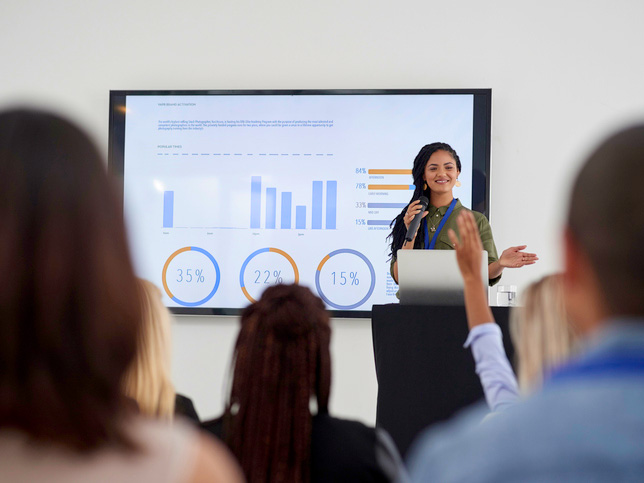
We offer targeted, online and in-person professional development in the following areas:
- Networking and boundary spanning,
- Evaluation capacity building,
- Systems and organizational change, and
- Collaborative dynamics.
Let us help your project, department, college, institution, or organization build the capacity needed to support your change goals.

Interested in our services?
You can reach out to either Dr. Lucas Hill (lhill6@wisc.edu) or Dr. Evangeline Su (esu6@wisc.edu) to set up an initial meeting to explore how we can best serve your needs. We look forward to hearing from you soon.
The Institute is an extension of the former National Change Initiative of the NSF Eddie Bernice Johnson INCLUDES Aspire Alliance.