Integrative Professional Framework
What is the Integrative Professional Framework (IPF2)?
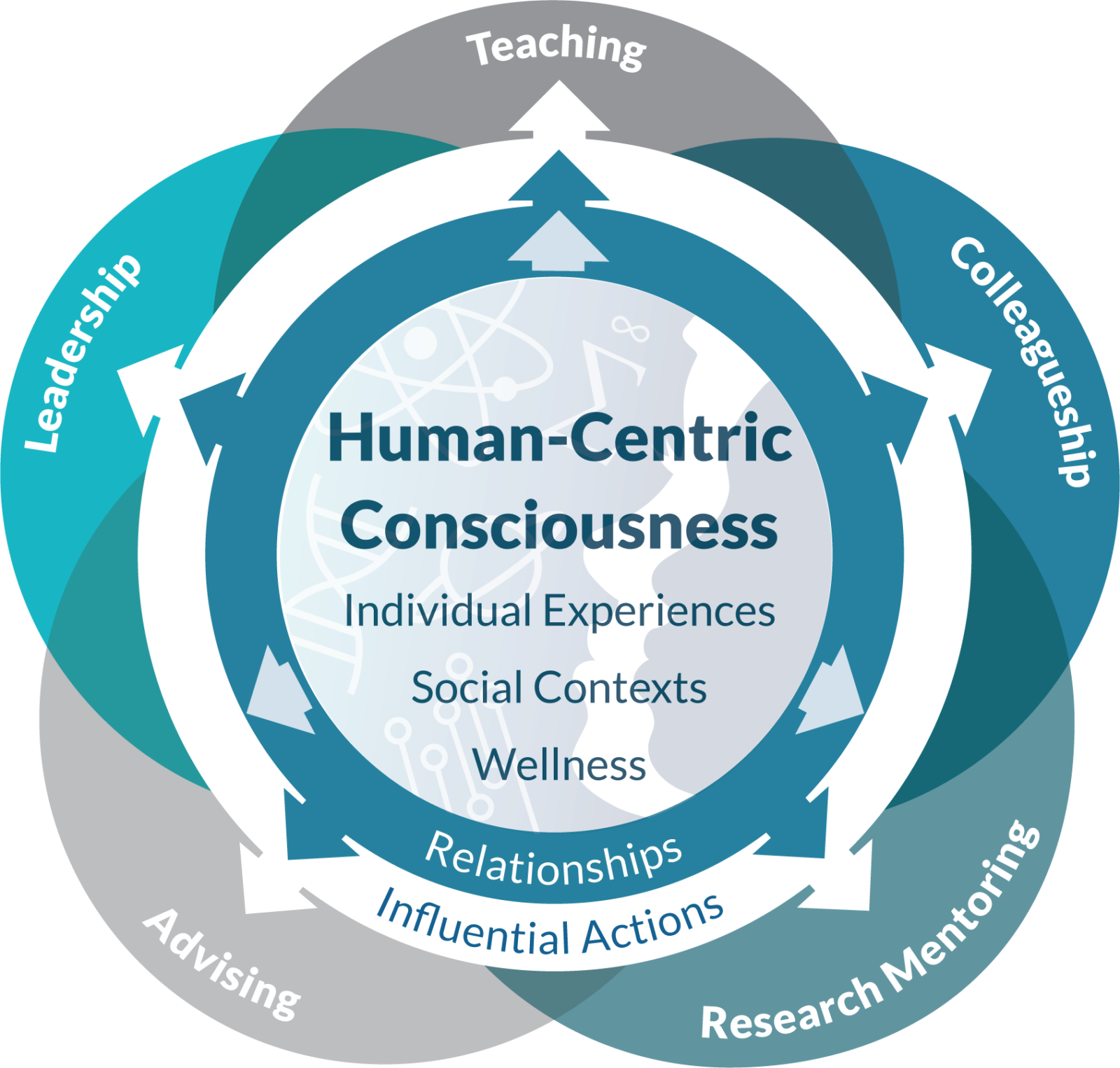
The IPF2 identifies five core domains:
- Awareness of Individual Experiences,
- Humility and Awareness of Various Social Contexts and Differences Among Various Communities’ Norms and Practices,
- Attention to and Prioritization of Wellness for Self and Others,
- Relational Approaches (Relationships and Partnerships), and
- Influential Actions – that are foundational to best professional practices.
Research on the IPF2 shows that this set of skills is common to inclusive practices across contexts and roles. These skills also contribute to health and well-being and student-ready climates within higher-education institutions and research, mentoring, and teaching-focused organizations.
Every person within an organization has agency, the ability to act or intervene to produce a particular effect. Whether students, faculty, staff, and administrators use their agency depends on reflecting on what happens if they do or do not act, and what actions or interventions are possible.
The SEER Institute’s work is to keep a human-centric lens on these choices so our clients can consider the change they want to see, the human influence on change, and reflect on their choices and impact.
Domain-Based Skill Sets

Individual Experiences
Developing an awareness of self and others’ social and cultural identities, the intersectionality of those identities, and examining the role that identity plays in creating effective learning and working environments.

Social Contexts
Developing an understanding of cultural differences in ways that enable effective interactions with others from different racial, ethnic, or social identity groups in both domestic and international contexts.
Relationships and Partnerships
Building one-on-one connections, trust and relationships through effective communication and relational skills that support effective interpersonal interaction. Effective communication includes learning to tell stories effectively, to use plain language, and to listen deeply.

Wellness
Building an awareness of what wellness means for oneself and others you engage or work with, and holding boundaries to protect that for yourself and those others, is fundamental to productivity and success. Overwhelmed students struggle to complete assignments. Stress can cause illness. Sick colleagues struggle to meet deadlines. Burnout can cause valuable people in the system to quit. Good self-management and management of others, whether as a direct supervisor or not, and whether managing up or down, require attentiveness to wellness. Effective change in systems depends on healthy people in the system to make the system function adaptably, smoothly, and well.

Influential Actions
Every time instructors teach, they are engaging in an effort to transfer knowledge. This is an influential action. Everyone in an organization gets reactions from others. How intentional we are about helping others feel welcome, excluded, cared for, or ignored has an impact, whether we choose it or not. Understanding influential actions that cause connection and disconnection, and that can help bring more people to care about a cause, is crucial for successful change.
Application to Professional Contexts
Integrative Professional Framework for Faculty
The IPF: Faculty promotes student success and faculty enrichment by providing a set of skills in the five domains – Individual Experiences, Social Context, Wellness, Relationships & Partnerships, & Influential Actions – that can be integrated and applied to the practices across faculty roles such as teaching, research mentoring, advising, leadership, and colleagueship. These integrative skills also contribute to health and well-being, as well as positive working environments within the institutional boundaries.
WHY care about the IPF: Faculty? Supportive and positive working environments in faculty careers:
- Foster student success
- Attract undergraduates to majors and minors, nurture postgraduate recruitment into disciplines, and support institutional enrollment needs
- Support faculty in achieving and maintaining balance in their own approaches to their work
Inclusive Professional Framework for Advising
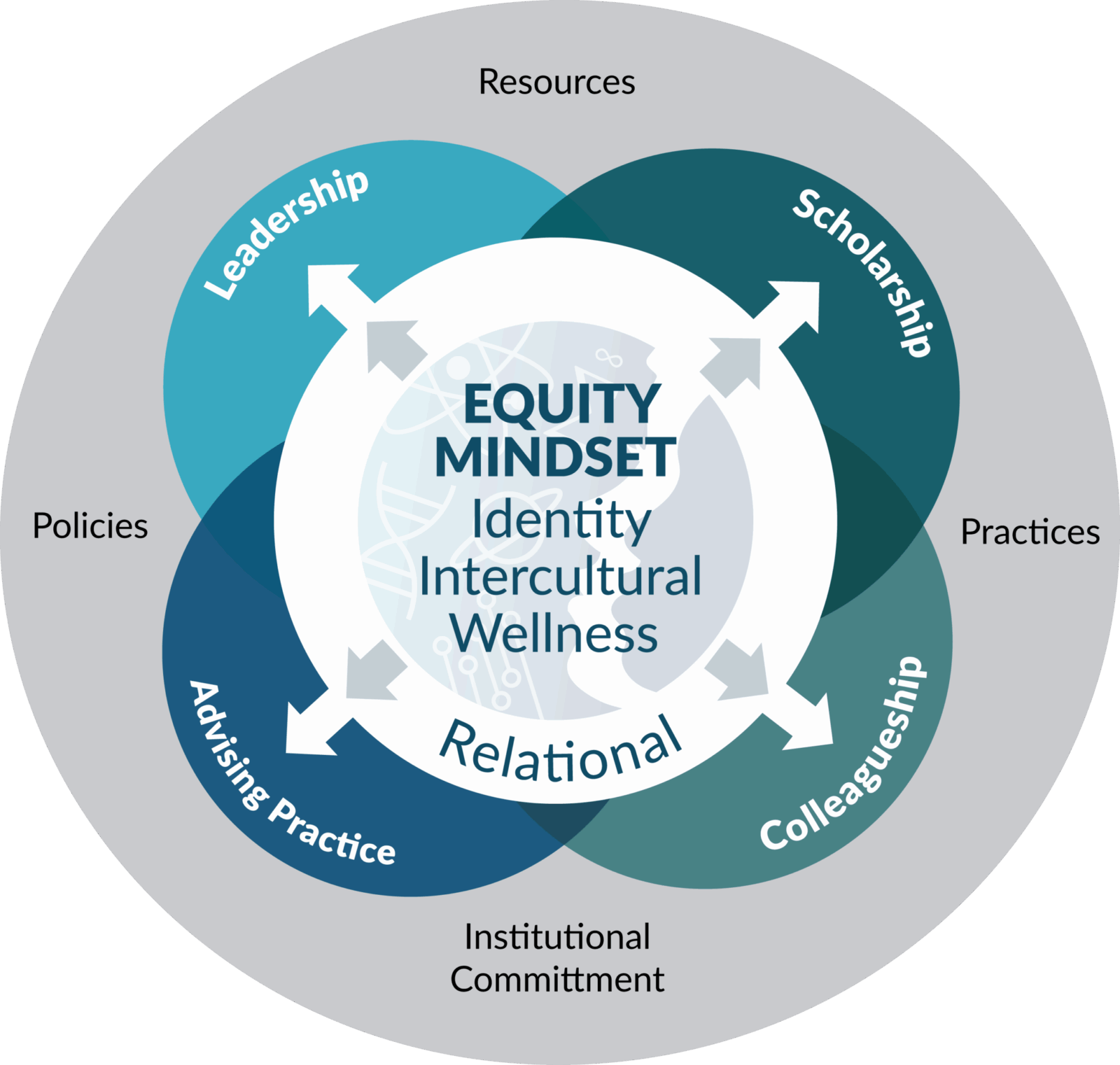
The IPF: Advising promotes student success by identifying a set of skills in the four domains – Identity, Intercultural, Wellness, and Relational – that can be integratively applied to practices across roles such as advising practice, leadership, scholarship, and colleagueship. These skills also contribute to well-being for individuals and to engaging, supportive climates within institutional advising units.
WHY care about the IPF: Advising? Supportive environments in advising students:
- Help students to feel that they matter, are valued and respected as educational customers, and help them to prioritize education in a positive manner
- Boost advisor engagement, capacity, learning, well-being and understanding of their work, leading to better student outcomes and sustained or increased enrollment
Inclusive Professional Framework for Societies
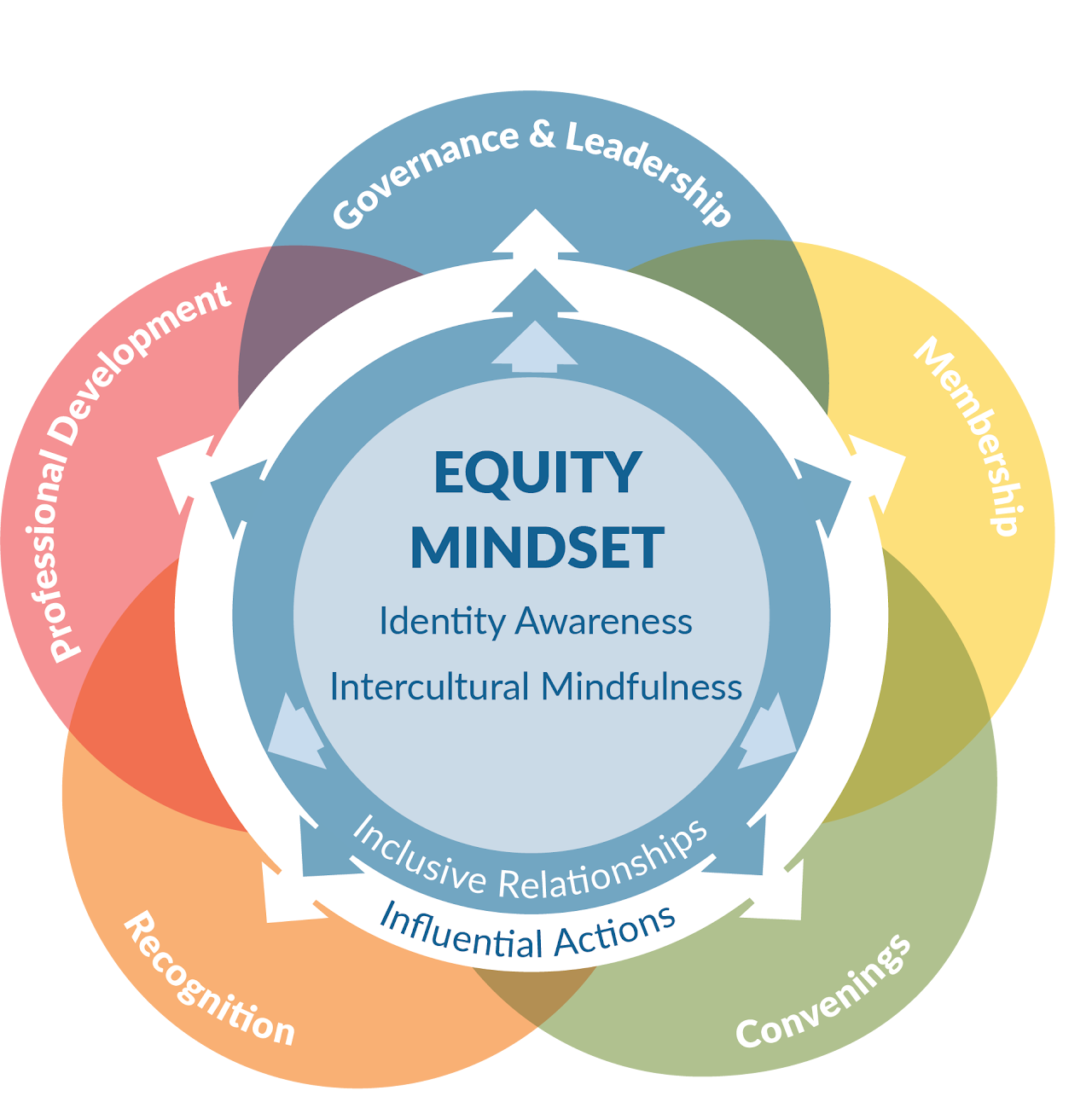
The IPF: Societies promotes STEM culture reform by providing a set of skills in the three domains – Identity Awareness, Intercultural Mindfulness, and Inclusive Relationships, plus a fourth domain – Influential Actions – that is informed by the specific functions performed by the society. This skill set can be applied to inclusive practices across society functions such as governance & leadership, membership, convenings, recognition, and professional development.
WHY care about the IPF: Societies? Professional and disciplinary societies:
- Serve broad memberships
- Help define disciplinary norms and culture
- Inform accrediting bodies
Thus providing “excellent leverage with which to design and promote change.” Learn more from National Academies Publication #11153 — Facilitating Interdisciplinary Research.
The Institute is an extension of the former National Change Initiative of the NSF Eddie Bernice Johnson INCLUDES Aspire Alliance.